Early Experimentation
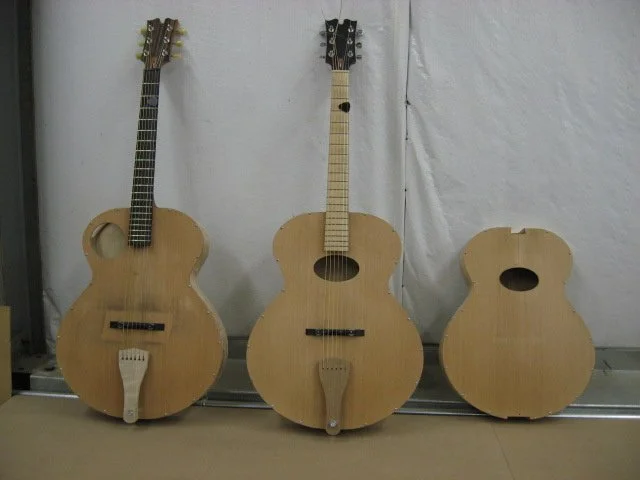
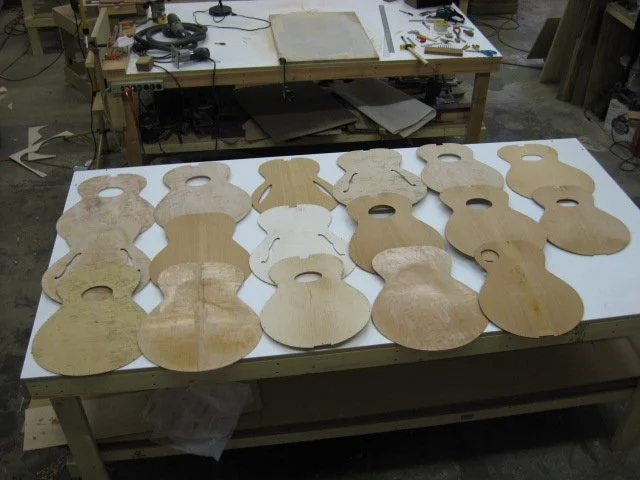
Beginning with steel-string acoustic archtops in 2009, I built several “test mule” guitars for my own use, designed to be easily disassembled so that soundboard construction could be systematically explored. I experimented with a variety of composite tops using core materials like balsa, Divinycell, and Nomex—materials I had previously worked with extensively in high-end yacht building.
In 2011, I completed a Nomex double-top archtop that has proven structurally durable over time, but ultimately fell short of my acoustic goals. That instrument taught me a valuable lesson: no amount of careful craftsmanship can compensate for a less-than-optimal design.
Further Experimentation
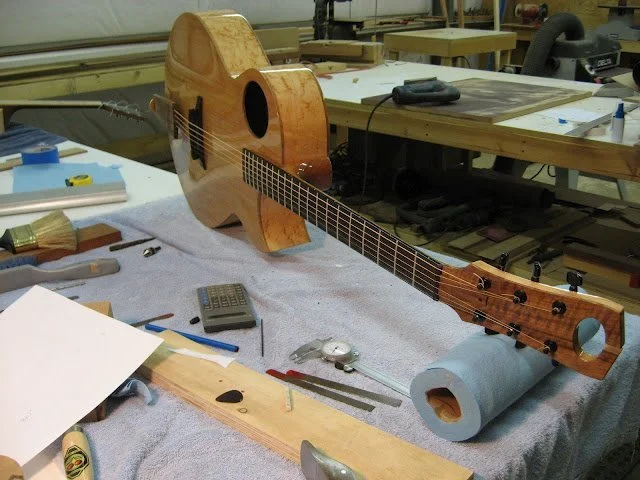
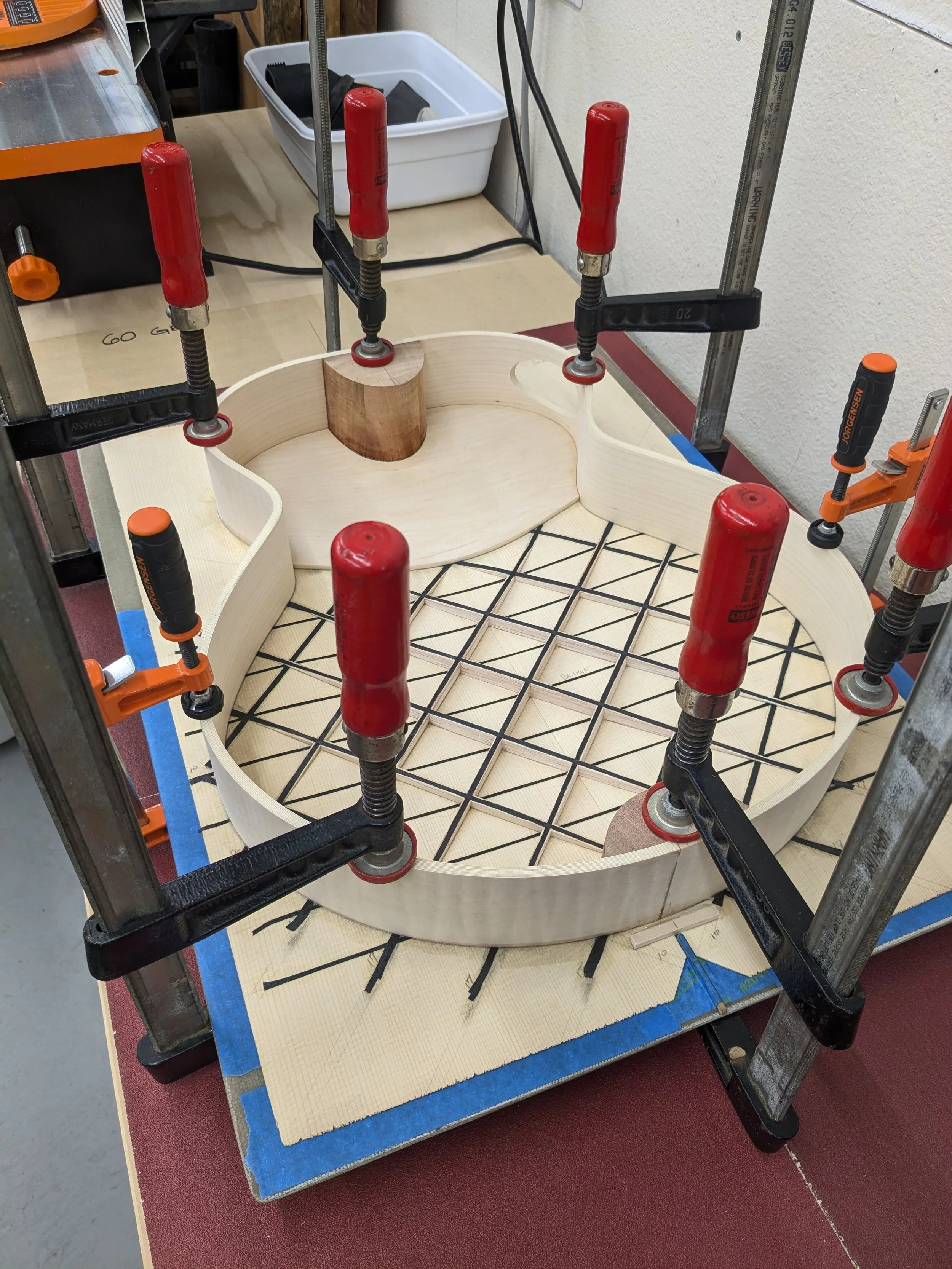
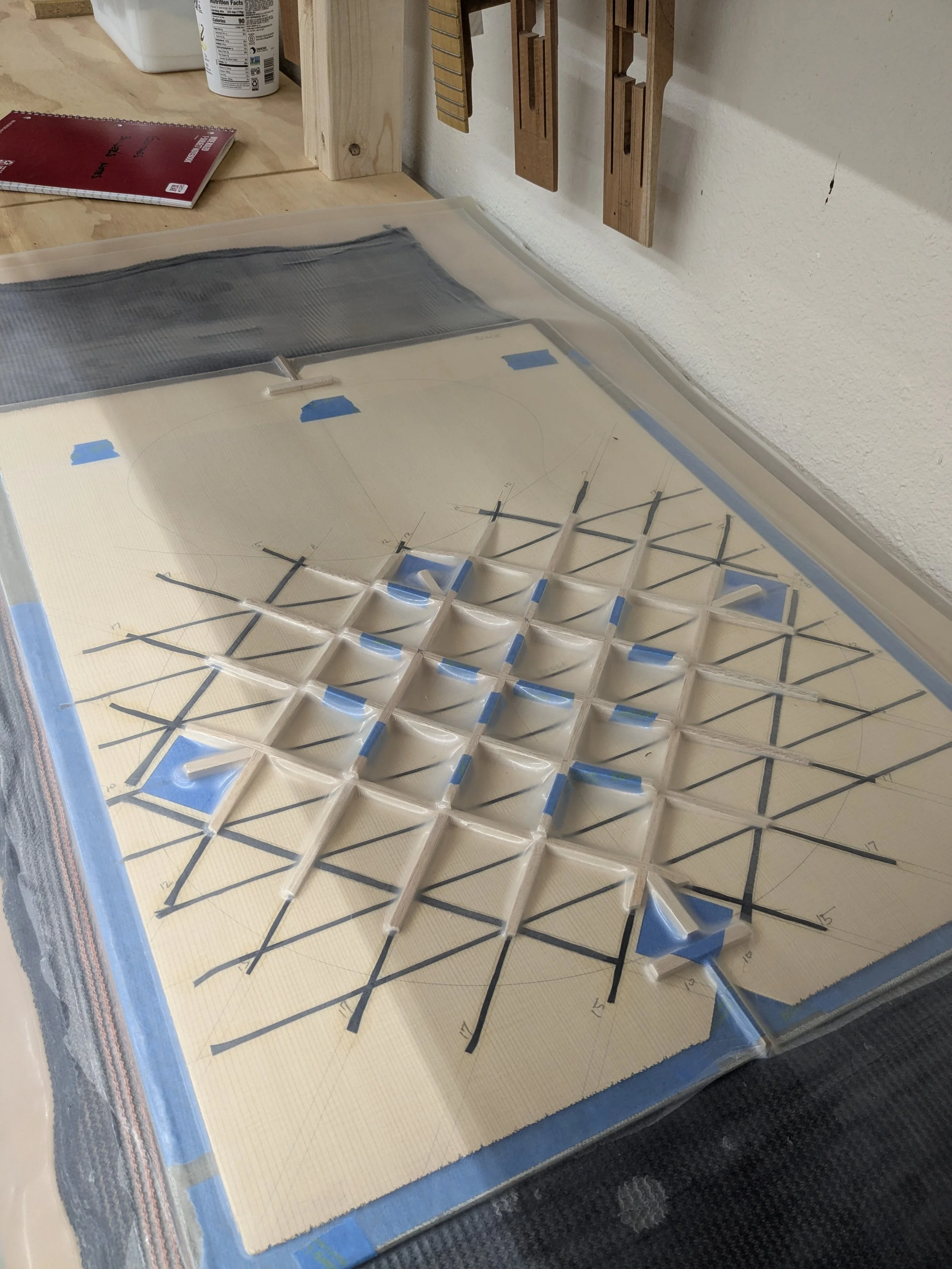
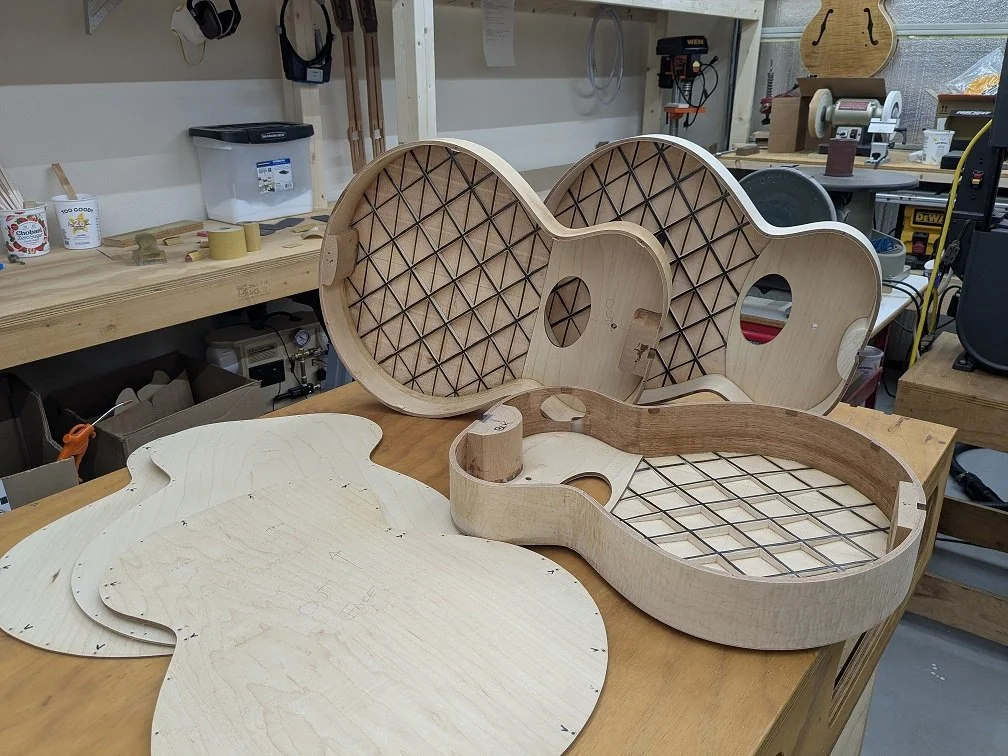
Later, drawing inspiration from the work of Greg Smallman and the Australian School of latticed-braced concert classical guitars, I experimented with various composite lattice bracing schemes applied to a thin arched soundboard. The top is gently coaxed into its arch under vacuum pressure - there is no heating, wetting, or steaming; the wood is allowed to flow naturally.
Traditional archtops have carved tops, which are inevitably too massive to achieve the level of responsiveness I seek. By using a thin, latticed soundboard, the top can be made much lighter for the same stiffness, allowing it to respond more quickly and clearly.
Neck, Bridge, and Playability
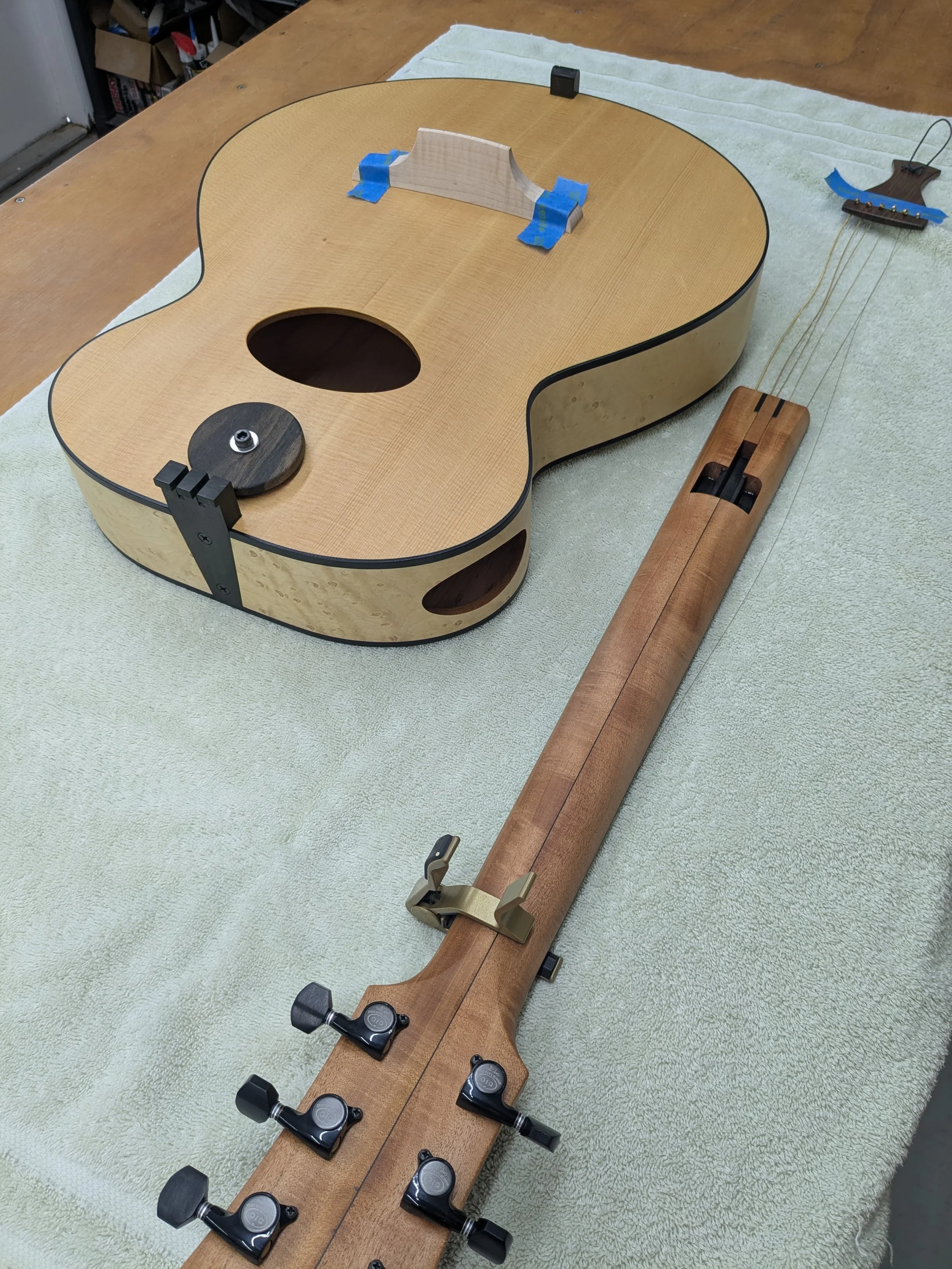
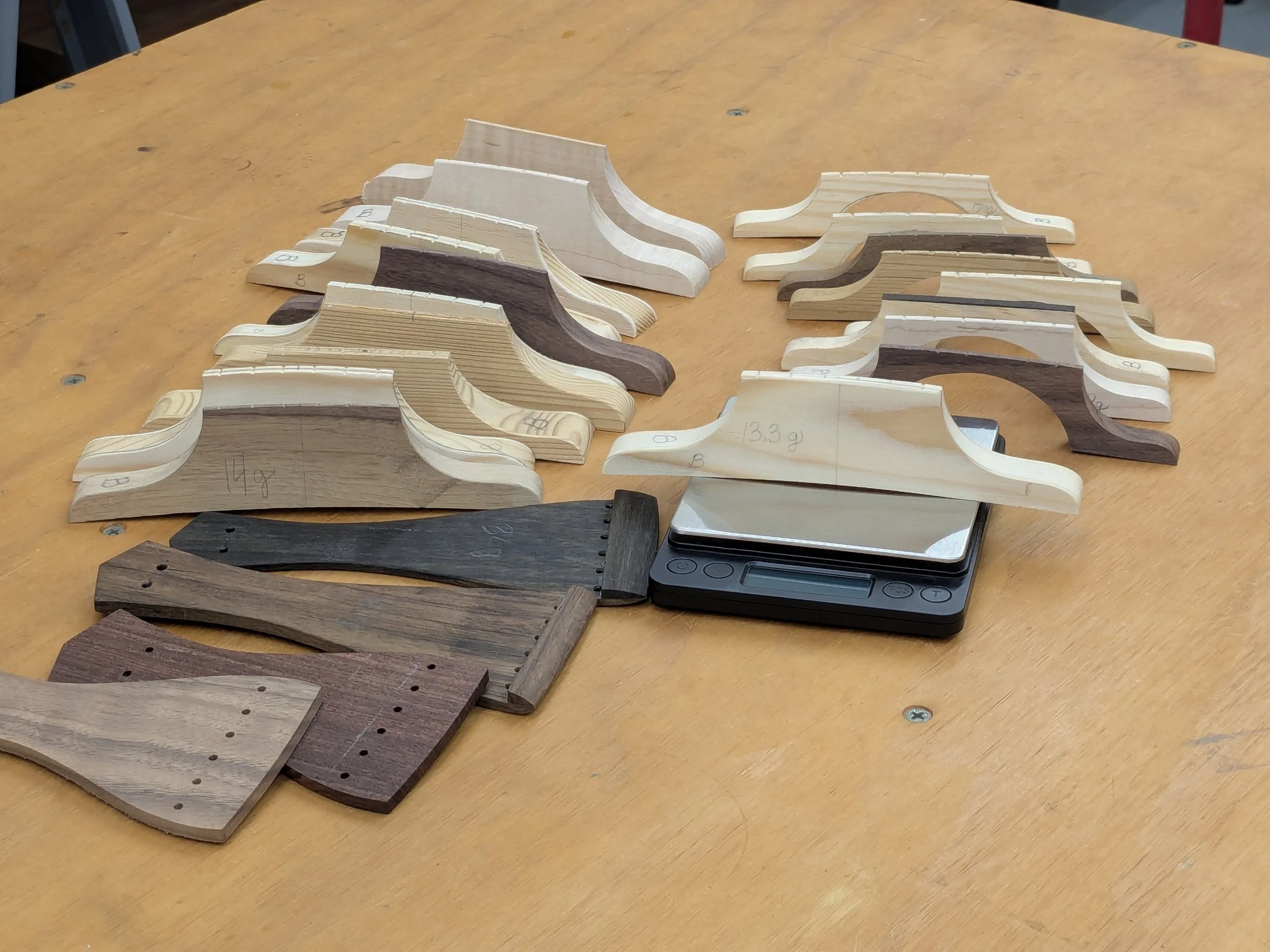
After a lifetime of playing archtops, I’ve become accustomed to having the action of the guitar easily adjustable without tools. Traditional two-piece bridges with metal thumbwheel arrangements are far too heavy to be acoustically optimal. Informed by the work of Ken Parker and with a great deal of my own experimentation, I use a hollow, ultra light maple bridge. You’ll notice that my bridges (and those of Parker’s archtops) are quite a bit taller than the traditional arrangement. The taller bridge creates a longer lever arm where a comparatively small wiggle of the strings at the saddle creates a deeper rocking motion at the base to drive the top.
Having a non-adjustable bridge drove the requirement for the neck itself to be adjustable. Again, inspired by Smallman, the neck attachment uses string tension alone to hold it in place. In my arrangement, the action can be adjusted on the fly via a thumbwheel under the neck extension — no tools required.
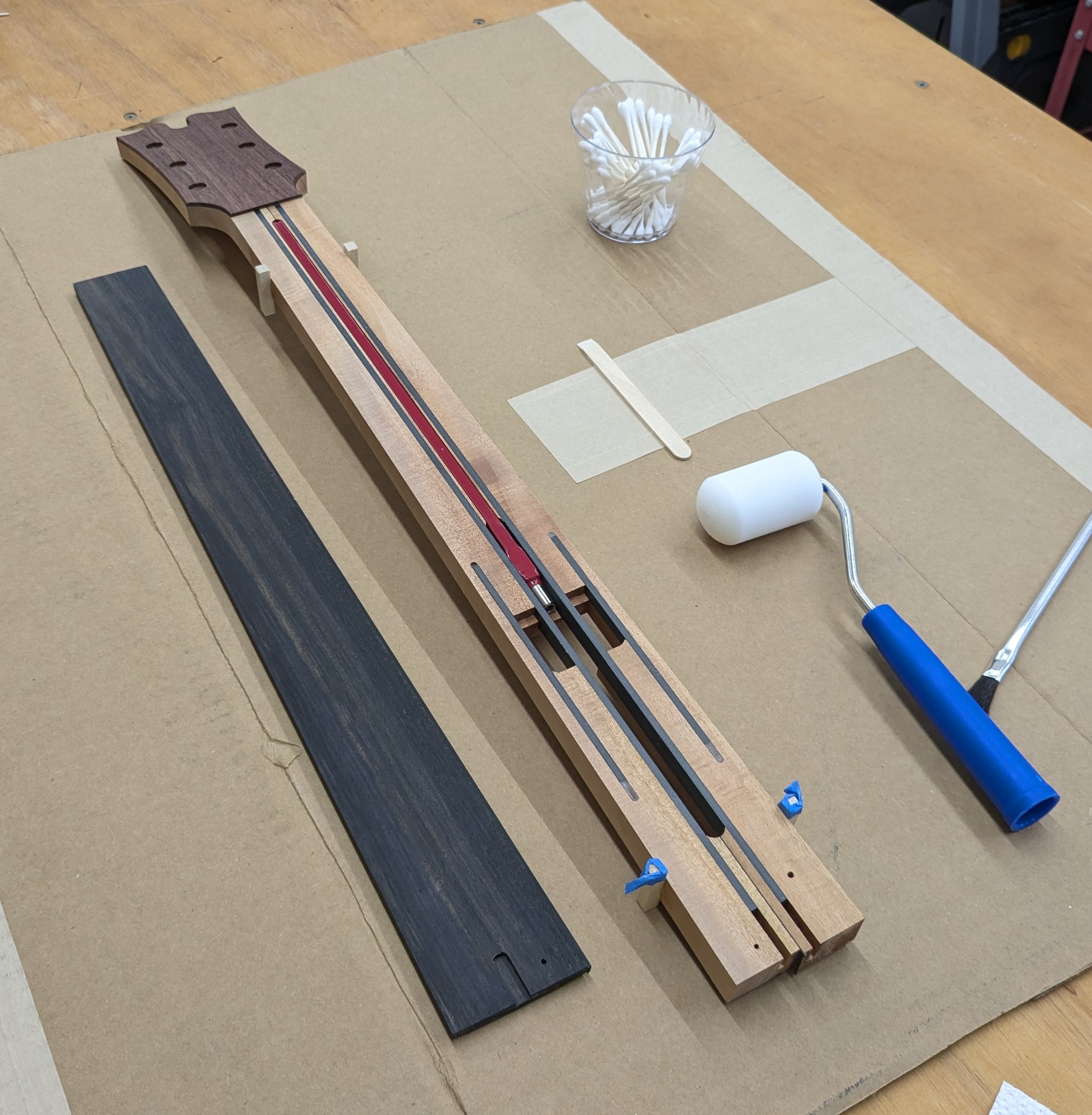
Additionally, unlike a traditional permanently glued neck, the modular neck can be removed and replaced without disturbing the body of the instrument. This simplifies finishing, allows the neck to be repaired or replaced if damaged, and makes future customization practical. The truss rod is adjusted at the heel end, leaving more uninterrupted wood in the headstock for improved strength. By treating the neck as a serviceable component while preserving the body—the heart of the instrument's voice—the modular design enhances long-term maintainability. As you'll discover on the Media page, this innovative construction is achieved without compromising tone or playability.